
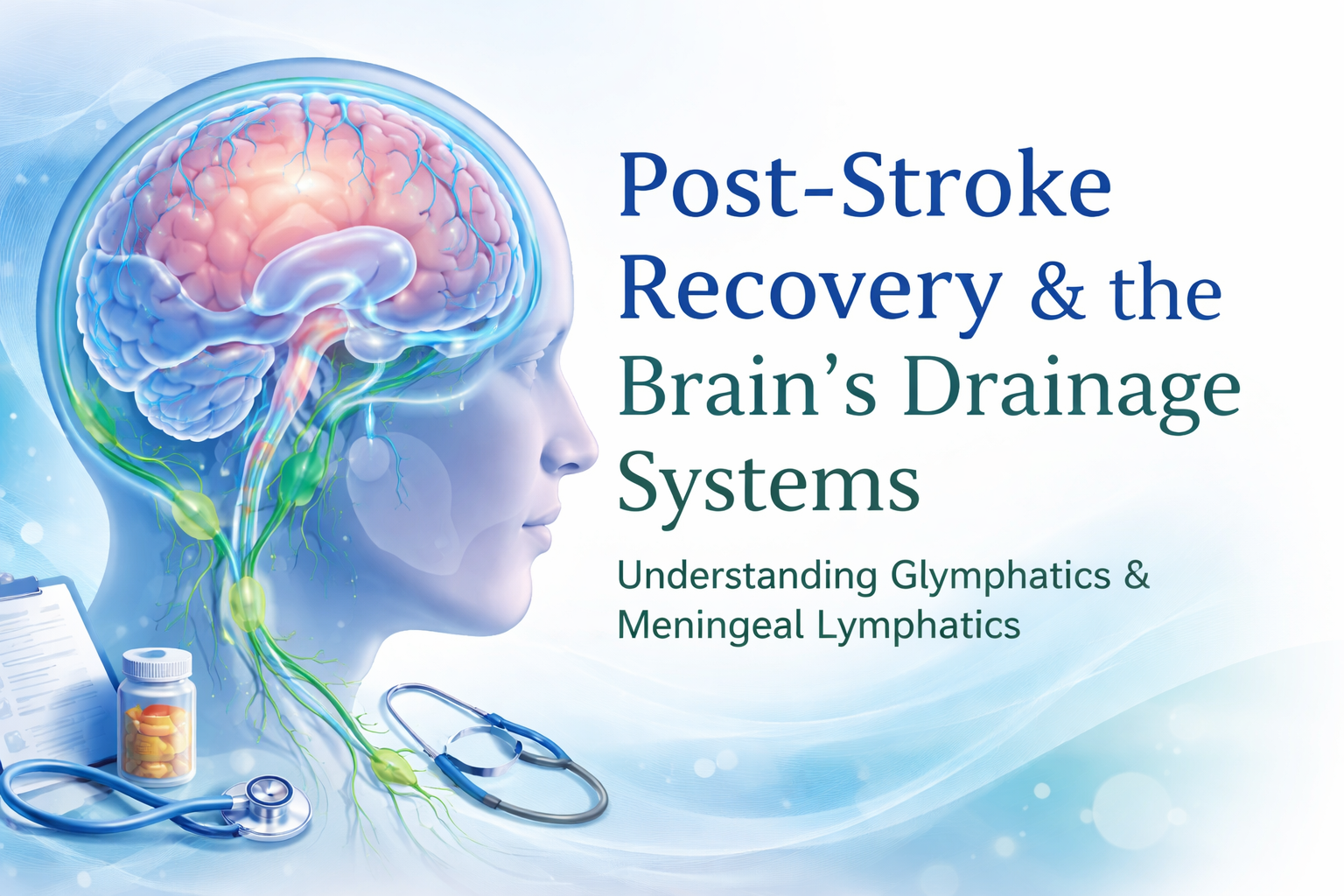
Post-Stroke Recovery and the Brain’s “Drainage Systems”: What We’re Learning About Glymphatics and Meningeal Lymph Nodes
Recovery after stroke is not just about muscle strength—it’s about the whole system calming down, clearing out what it doesn’t need, and rebuilding what it does.
One of the most exciting areas of emerging research is the brain’s own fluid and waste clearance network, often referred to as the glymphatic system, along with the meningeal lymphatic vessels that drain toward lymph nodes in the neck. These systems appear to play a role in brain swelling (edema), inflammation, and the longer recovery process after stroke.
The quick takeaway
- The glymphatic system and meningeal lymphatic vessels help move fluid and metabolic “waste” through and out of the brain.
- After an ischemic stroke, human research suggests glymphatic clearance can be impaired and relates to brain edema and outcomes.
- Meningeal lymphatics appear to influence immune signaling after stroke and may affect recovery pathways.
- This is promising science—but it’s not yet a direct recipe for specific treatments.
For now, we translate it into safe, evidence-aligned habits that support brain health such as sleep, movement, positioning, pacing, and overall cardiovascular care.
What are glymphatics and meningeal lymphatics — in plain English
Think of the glymphatic system as the brain’s internal “rinse cycle.” It’s a pathway where cerebrospinal fluid moves along channels around blood vessels, mixing with fluid in brain tissue to help clear byproducts of metabolism.
The meningeal lymphatic vessels sit in the membranes around the brain (the meninges). They help drain fluid and immune signals out toward lymph nodes in the neck. Together, these systems connect brain fluid balance with the immune system in ways researchers are still mapping out.
What the research is showing in stroke (and what it does NOT prove yet)
What current research suggests
1) Glymphatic clearance can be disrupted after ischemic stroke. Human imaging research suggests that impaired clearance is associated with brain edema and functional outcomes.
2) Meningeal lymphatic pathways matter in the post-stroke immune response. Stroke triggers a cascade of immune activity, and meningeal lymphatics appear to play a role in that signaling.
What this does NOT prove
- It does not prove that any external lymphatic technique directly “drains the brain” or speeds stroke recovery.
- It does not mean clinicians can diagnose glymphatic dysfunction during a standard rehab visit.
- It does not replace the foundations of stroke recovery.
So… what does this mean for a real person recovering from stroke?
I translate emerging science into what’s safe, practical, and likely to help—even if indirectly.
Evidence-aligned priorities
- Sleep quality and consistent sleep timing
- Gentle, progressive movement
- Pacing and nervous system regulation
- Head and neck comfort
- Hydration and salt balance as appropriate
- Managing vascular risk factors
Takeaways from my patients recovering from strokes
As a certified stroke rehabilitation specialist, stroke recovery is more than a process—it’s a passion.
- Improved cognition and reduced brain fog
- Improved motor control and coordination
- Improved balance
- Improved energy and sleep quality
- Improved mood and wellbeing
- Reduced limb swelling
Where Manual Lymphatic Drainage fits (carefully and honestly)
Manual Lymphatic Drainage is used as a supportive tool for comfort and swelling management—not as a treatment for stroke itself.
If sessions improve sleep, breathing, relaxation, and movement tolerance, those effects can meaningfully support rehabilitation.
A realistic timeline framework
Acute phase (days 0–7)
Medical stabilization and early mobility within medical guidance.
Subacute phase (weeks 1–12)
High-repetition practice, endurance building, balance, cognition, and pacing.
Chronic phase (3+ months)
Long-term conditioning, role return, pain prevention, and cardiovascular protection.
Red flags — when to seek urgent medical care
- Sudden weakness, facial droop, speech or vision changes
- Severe headache with confusion or vomiting
- Chest pain or shortness of breath
Bottom line
Anchor recovery in proven stroke rehabilitation practices, and layer in safe supportive strategies that improve sleep, comfort, mobility, and consistency.
References
1) Zhu J, et al. Glymphatic System Impairment Contributes to the Formation of Brain Edema After Ischemic Stroke. Stroke. 2024.
2) Perla M, et al. Role of the Meningeal Lymphatics in Stroke. Stroke. 2023.




Leave A Comment